Why Your Nordic Walking Pace Always Drops on the Way Back
Quick Answer: The return leg slows for four reasons that stack: grip fatigue in the forearms reduces how firmly you can push through the strap, the pole plant creeps forward as your arms tire and stops producing propulsion, wind that helped on the way out now opposes you, and the familiar-route effect makes the same distance feel longer. Loosen your grip deliberately from the start, count your plant position at the turnaround, and plan routes so the exposed section is the outbound half.
Same path, same shoes, same person. Six percent slower coming home, every time.
Most of that gap is not fitness, and it is unusually fixable.
Why grip fatigue slows you before your legs do
Nordic walking propulsion comes from pushing through the strap, not from gripping the pole. The technique is designed so that the hand can be almost open at the end of the push, with the strap transferring force.
Almost everybody grips too hard anyway, particularly in the first mile when energy is high. Forearm flexors are small muscles working continuously, and they fatigue well before the large muscles of the legs.
A fatigued forearm produces a weaker push, which reduces the propulsive contribution of the upper body - which is a meaningful share of Nordic walking’s advantage over ordinary walking. The pace drops without the legs feeling any more tired.
You then compensate by shortening the arm swing, which makes the whole action less efficient again. This is where the compounding happens.
Consciously relaxing the hands every ten minutes fixes more of this than any strength work, and most people find their outbound grip was far tighter than they realised.
How the pole plant creeps forward without you noticing
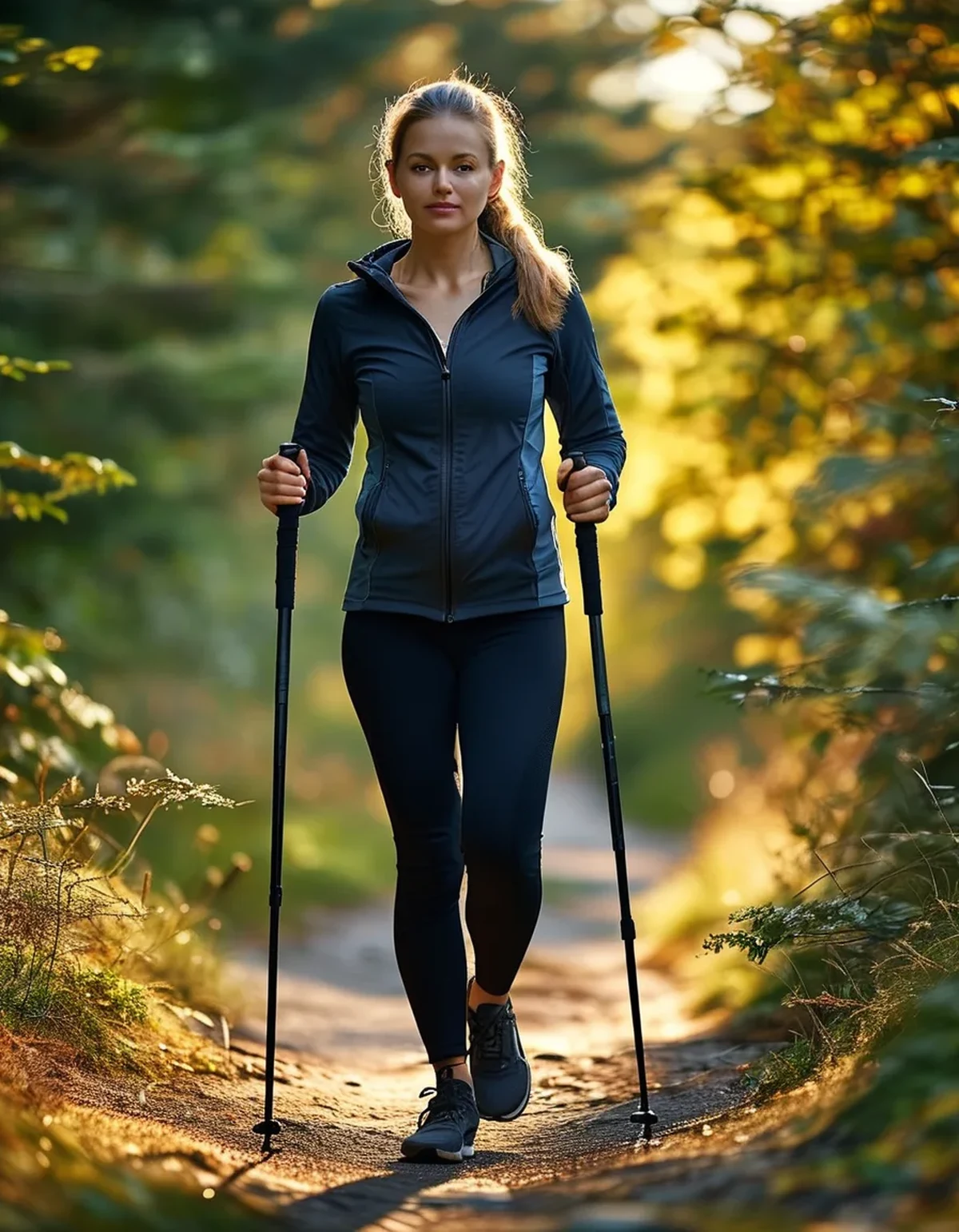
Correct technique plants the pole behind the front foot, angled backward, so the push travels backward and moves you forward.
As arms tire, the plant migrates forward. A pole planted level with or ahead of the foot generates a braking vector rather than a propulsive one, and you are now paying for the poles rather than being paid by them.
Uphill sections accelerate the migration, because the natural response to a gradient is to reach further forward, and the habit persists onto the flat afterwards.
Check it at the turnaround, deliberately. Look down once and note where the tip lands relative to your front foot. This single check is often worth more than the rest of the technique work.
Shorten the arm swing rather than reaching further when you are tired. A short, correct swing behind the body beats a long, forward, braking one, and it feels counterintuitive enough that people need to be told.
And listen to the tip contact. A crisp click behind you sounds different from a scuff in front - it is an audible cue for something otherwise hard to monitor.
The route effects nobody accounts for
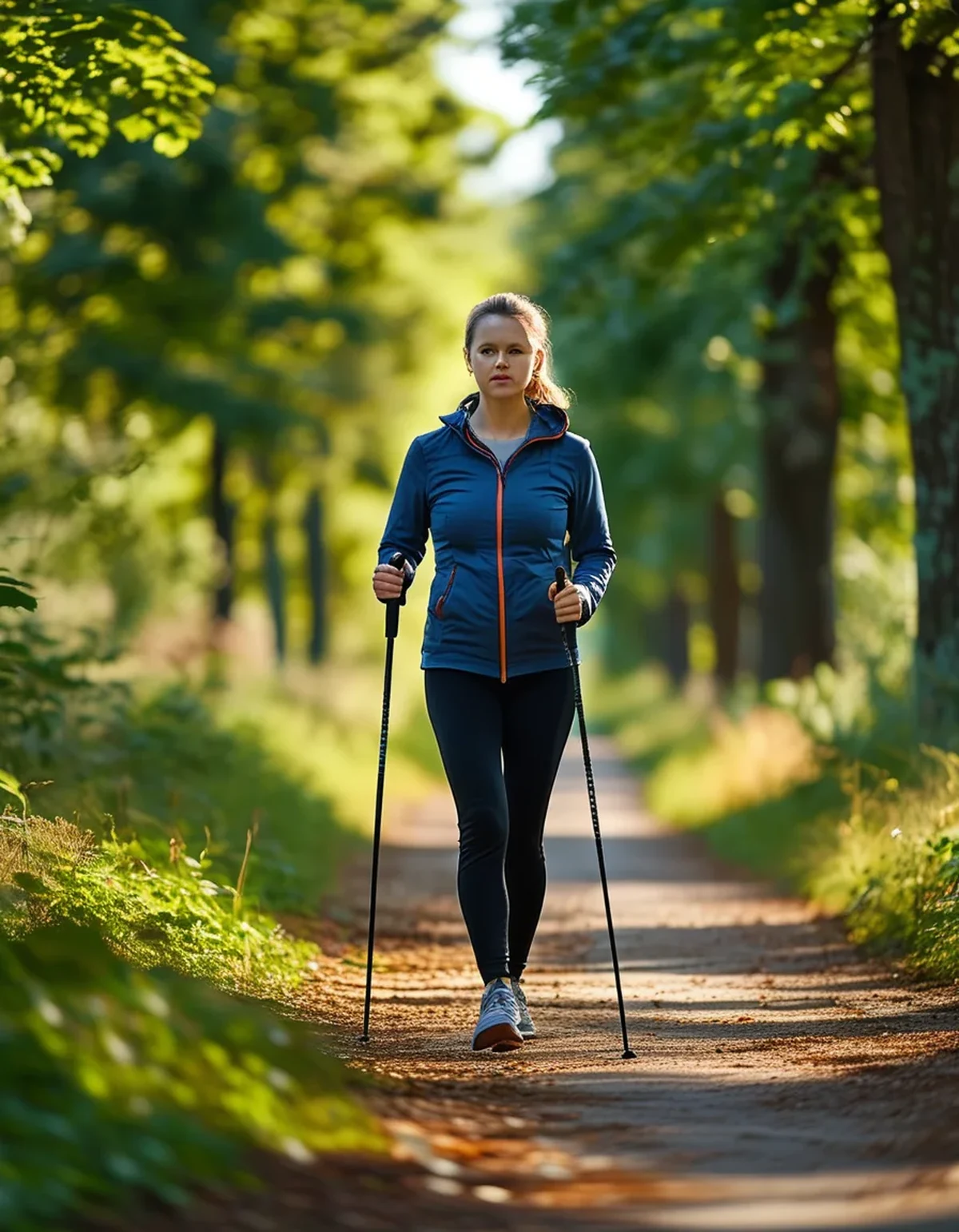
Out-and-back routes usually mean wind assistance one way and opposition the other, and a headwind of even 8 to 10mph raises energy cost noticeably at walking speeds - more so with poles, because your arms are moving through the air.
Very few routes are genuinely flat. A gentle downhill of a percent or two on the way out is unnoticeable as a gradient and clearly noticeable as an effort difference when reversed.
Surface changes matter more than expected in late summer. A path that was firm in the morning can be softer and more loose-leaved in the afternoon, and pole tips slip differently on dry dust than on damp ground.
Familiarity makes the return leg feel longer. Perceived duration is strongly related to novelty; the outbound half has new information and the return half has none, which is why the same distance feels longer coming home.
Sun position changes both temperature and glare on the return, and a route that was shaded outbound is often exposed on the way back at that time of day.
Plan the exposed, windward, uphill half as the outbound one and you will convert a positive split into an even one without changing anything about your fitness.
5 Mistakes That Cost You the Return Leg
Starting too fast because the poles feel good. Nordic walking makes the first mile feel easy in a way ordinary walking does not, and that early enthusiasm is spent from the same account as the return.
Setting the straps too loose. A loose strap forces you to grip to keep control, which is the direct cause of the forearm fatigue. Snug straps allow open hands.
Pole length set from a chart rather than from your walking. Slightly too long is the common error, and it pushes the plant forward and raises the shoulders, both of which cost you later in the walk.
Not drinking on walks under an hour. In late summer humidity, an hour of Nordic walking is a genuine sweat load, and mild dehydration shows up as exactly this kind of second-half fade.
Wearing gloves that are too thick. Reduced tactile feedback makes people grip harder to compensate, which is why the same walk feels different once autumn gloves come out - and it is worth choosing thin ones early in the season.
FAQ: Nordic Walking Pace, Answered
How much slower is normal on the return?
A few percent is common and largely explained by wind, gradient and grip fatigue. If it is consistently ten percent or more, technique drift is the likeliest cause.
Should I train to fix it or change the route?
Both, in that order of effort. The route change is free and immediate; the grip and plant habits take a few weeks to consolidate.
Are my poles the wrong length?
With the tip on the ground beside your foot, your elbow should sit at roughly 90 degrees or slightly more open. Too long is far more common than too short.
Does the strap type matter?
A well-fitted glove-style strap makes open-hand technique genuinely possible, which is difficult with a simple loop. It is the accessory most worth upgrading.
Will this also help my shoulders?
Usually yes - most shoulder soreness in Nordic walking comes from a forward plant and a raised shoulder, which are the same faults that slow the return leg. Persistent shoulder pain is worth having assessed rather than trained through. This is general information, not medical advice.
TL;DR:
- Forearm grip fatigue arrives long before leg fatigue and directly reduces the propulsion poles provide.
- The pole plant creeps forward as arms tire, converting propulsion into braking - check the plant position at your turnaround.
- Wind, a one percent gradient and sun exposure explain a surprising share of the difference; route the exposed half outbound.
- Snug straps allow open hands; loose straps force gripping, which is the root of the fatigue.
- Familiar routes feel longer because there is no new information on the way home.
When tired, shorten the arm swing rather than reaching further forward. It feels wrong and it is right.
See It in Motion
Seen here: High Waist Yoga Leggings with Side Pockets — shop it on bubblelime.com
Keep Reading
This article is for general informational and styling purposes only. Fit, sizing, and product availability may vary.