When to Replace Nordic Walking Pole Tips and Rubber Paws
Quick Answer: Rubber paws for pavement typically last 300 to 800 kilometres depending on surface and technique, and carbide tips for trails last far longer, often years. Replace paws when the angled contact face has worn flat, when the rubber tread has disappeared, or when you can feel the metal tip through it. The tell is not appearance, it is behaviour: poles that slip slightly on the plant, or that no longer feel like they bite, are worn. Most people run them 30 to 50 percent past the point they should.
A new set of paws costs very little and changes how the poles feel immediately.
The difficulty is that the wear happens over months, your technique adapts continuously to compensate, and there is no obvious day on which they stopped working.
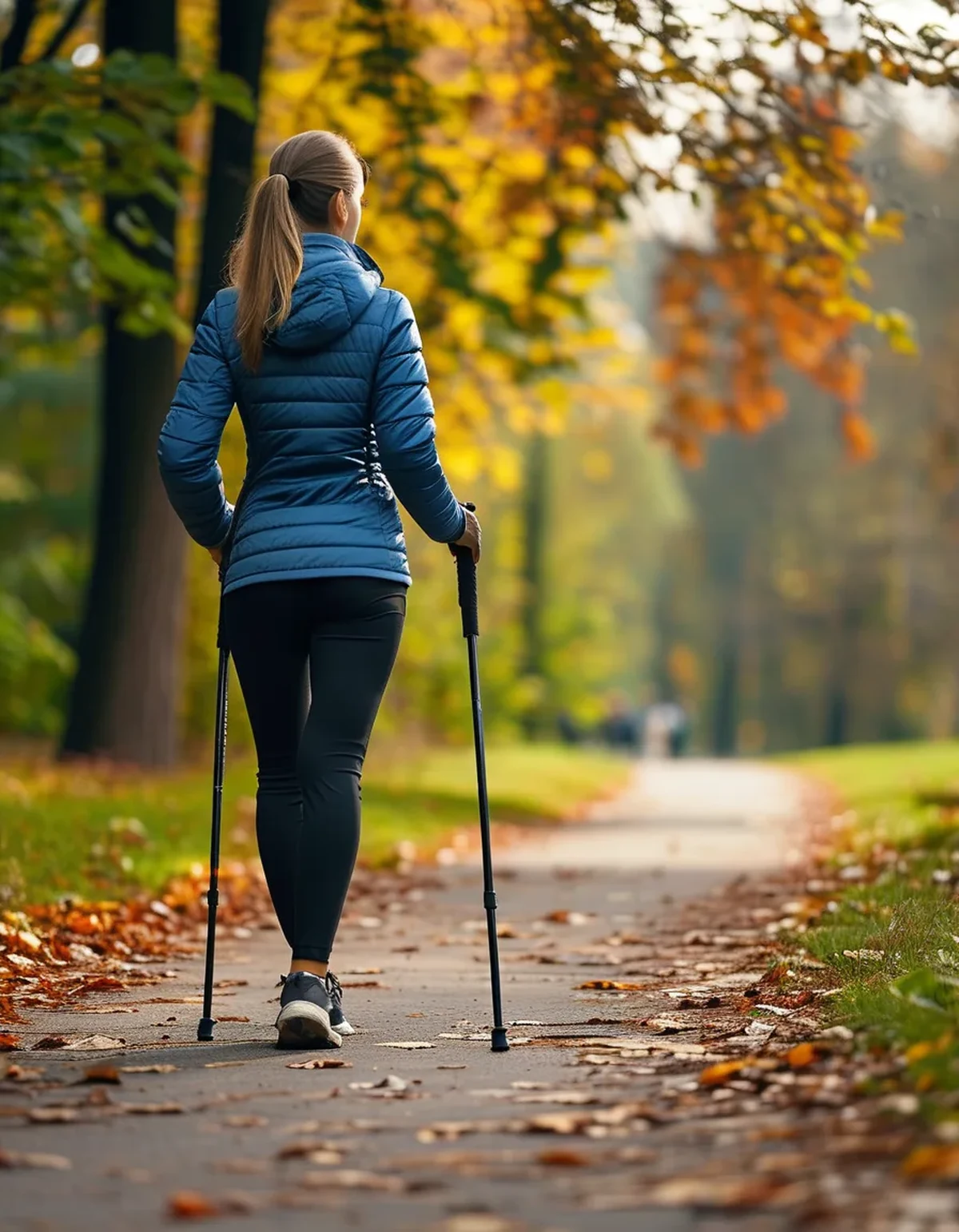
How do the two tip types wear differently?
They are doing completely different jobs.
Carbide or steel tips are for soft ground, trails, grass and snow. They are extremely hard and wear very slowly. On tarmac they wear quickly and they slip, which is why they are not the pavement option.
A worn carbide tip goes from a point to a rounded nub. Realistically this takes years of trail use for most walkers.
Rubber paws or asphalt tips slip over the metal tip for hard surfaces. These are consumables. They wear through friction against the exact abrasive surfaces they are designed to grip.
The wear is asymmetric, and this is the part people miss. Nordic walking plants the pole at an angle behind you, so wear concentrates on one face of the paw. The rest of the paw can look almost new while the contact face is completely flat. Looking at a paw from the side tells you very little; you have to look at the angled face.
Do both poles wear at the same rate?
Usually not. Most people have a dominant side that plants harder, and a slight asymmetry in pole angle. Check both, and expect to replace them together anyway.
What are the actual signs of wear?
Behavioural first, then visual, because behaviour changes before the appearance becomes obvious.
The plant feels less secure. A good paw bites on contact. A worn one gives a fraction of a second of slip before it holds, and you feel it as a slight loss of confidence rather than as a slip.
Noise changes. New paws are relatively quiet. Worn ones click, because the rubber has thinned enough that the metal tip transmits impact.
Your stride shortens. If you cannot push confidently through the pole, you stop reaching as far back, which shortens the propulsive phase. This is the real cost, since the push-back phase is where Nordic walking gets most of its benefit over ordinary walking.
Visually: the angled contact face has gone flat and shiny. Any tread pattern has disappeared. The rubber is thin enough to see or feel the metal beneath. Cracking around the collar.
A useful test: press the paw hard against a smooth floor at your normal plant angle and push. A good paw grips. A worn one skids.
And a seasonal one: worn paws lose grip disproportionately in the wet, so a set that felt adequate in August can feel genuinely unsafe on the first wet autumn walk.
How long should they actually last?
Ranges rather than numbers, because the variation is large.
Typical rubber paw life: roughly 300 to 800 kilometres. At three walks a week of 5km, that is somewhere between five months and a year.
What shortens it:
- Rough tarmac and concrete wear far faster than smooth asphalt or packed gravel.
- A more vertical plant angle concentrates wear on a smaller area.
- Heavier walkers and stronger pushers wear them faster, which is a sign of good technique rather than a problem.
- Dragging the poles between plants, common when tired, abrades them without doing any work.
What extends it:
- Correct pole length, which produces a consistent plant angle.
- Rotating two sets, which sounds excessive and does genuinely even out the wear face.
- Removing them for trail sections rather than walking mixed terrain on paws.
Carbide tips: often several years, and frequently the pole is replaced before the tip is. Check them annually rather than seasonally.
Are expensive paws worth it?
Generally yes, in a modest way. Better compounds last longer and grip better wet. The difference in cost is small relative to how often you replace them.

What Nobody Tells You About Pole Tips
Paws are not universal, despite looking similar. Tip diameters vary between manufacturers, and a paw that nearly fits will work loose and eventually fly off mid-stride. Match the brand or check the diameter specification.
They come off more easily than they go on. A paw that has been on for months bonds slightly. Warm water softens the rubber and makes removal much easier than fighting it cold.
Check the paw is fully seated after fitting. A partly seated paw wears unevenly and comes off. Push until the metal tip is fully home, and give it a firm twist.
Carry a spare. A paw lost mid-walk on tarmac leaves you with a metal tip on hard ground, which slips, damages the tip and is genuinely a fall risk. One spare in a pocket is the whole solution.
Wet leaves are the seasonal hazard, and worn paws are dramatically worse on them than fresh ones. Fallen leaves over damp tarmac reduce available grip substantially, and a flat, shiny paw has almost nothing to bite with.
And the one that changes how you think about it: paws are the cheapest performance upgrade available for these poles. A new set restores the plant confidence that lets you push properly, which restores the stride length, which restores the actual training effect. People spend considerably more on new poles when the problem was a worn consumable.
What should the maintenance routine be?
Small, seasonal, and almost free.
- Check the contact face every month if you walk regularly. Look at the angled face specifically, not the side.
- Replace at the first sign of a flat, shiny face, not when the metal shows. By the time metal is visible you have been walking on a compromised paw for weeks.
- Keep one spare set in the bag or the car.
- Wipe the tips after muddy or salted walks. Road salt in winter degrades rubber and corrodes the metal tip underneath.
- Check the paw is tight before each walk. Two seconds, and it prevents the one failure mode that actually matters mid-walk.
- Inspect the carbide tips annually for rounding, and check the pole baskets if you use them.
- Check the straps at the same time. Wrist straps wear at the same rate as everything else and a stretched strap changes your whole technique by allowing the hand to shift.
Right now is the sensible moment to do this, before the wet season. Grip requirements rise substantially once paths are wet and leaf-covered, and a set of paws that was adequate through a dry summer is often the first thing to catch someone out on a damp October morning.
This is general information, not medical advice.
FAQ: Pole Tip Questions, Answered
Can I use the metal tips on pavement occasionally?
Briefly, for a crossing, and it is not ideal. Carbide slips on tarmac and wears quickly on it. For any real distance, fit the paws.
Do rubber paws work on gravel?
On packed gravel, reasonably. On loose gravel they slide, and metal tips work better. Mixed surfaces are the common frustration, and most people choose based on the majority surface.
Why does one pole feel different from the other?
Uneven paw wear, or a strap that has stretched on one side. Check both, since the asymmetry usually comes from technique and will recur.
Are the paws with a tread pattern better?
Generally yes on wet surfaces, since the tread channels water. They wear at a similar rate and the wet grip advantage is worth having through autumn and winter.
TL;DR:
- Rubber paws are consumables, typically lasting 300 to 800km. Carbide tips last years.
- Wear concentrates on the angled contact face, so a paw can look fine from the side and be finished where it matters.
- The signs are behavioural first: a slight slip on the plant, a clicking noise, and a shortened stride as you stop pushing confidently.
- Replace at the first flat, shiny contact face, not when metal shows through.
- Carry a spare, check tightness before each walk, and match the paw to your pole’s tip diameter.
Check them before the wet weather rather than after. A worn paw that coped with a dry summer is exactly what slips on the first leaf-covered morning.
This is general information, not medical advice.
See It in Motion
Seen here: Yoga Jogger Sweatpants with Pockets — shop it on bubblelime.com
Keep Reading
This article is for general informational and styling purposes only. Fit, sizing, and product availability may vary.