Why Winter Gloves Quietly Change Your Nordic Walking Technique
Quick Answer: Gloves add material between your hand and the strap, which slackens the strap’s effective fit and moves the load from the strap onto your grip. Nordic walking’s whole mechanism depends on pushing through the strap with a relaxed, open hand. Once you start gripping, the arm drive shortens, the forearms fatigue, and the technique quietly degrades into walking with poles. Re-adjust the straps for glove thickness and choose thin gloves over warm ones.
Everything felt right in September. First frost arrives, gloves go on, and by week two your forearms ache and your heart rate is lower for the same route.
Nothing about your technique changed on purpose.
Three millimetres of fabric changed it for you.
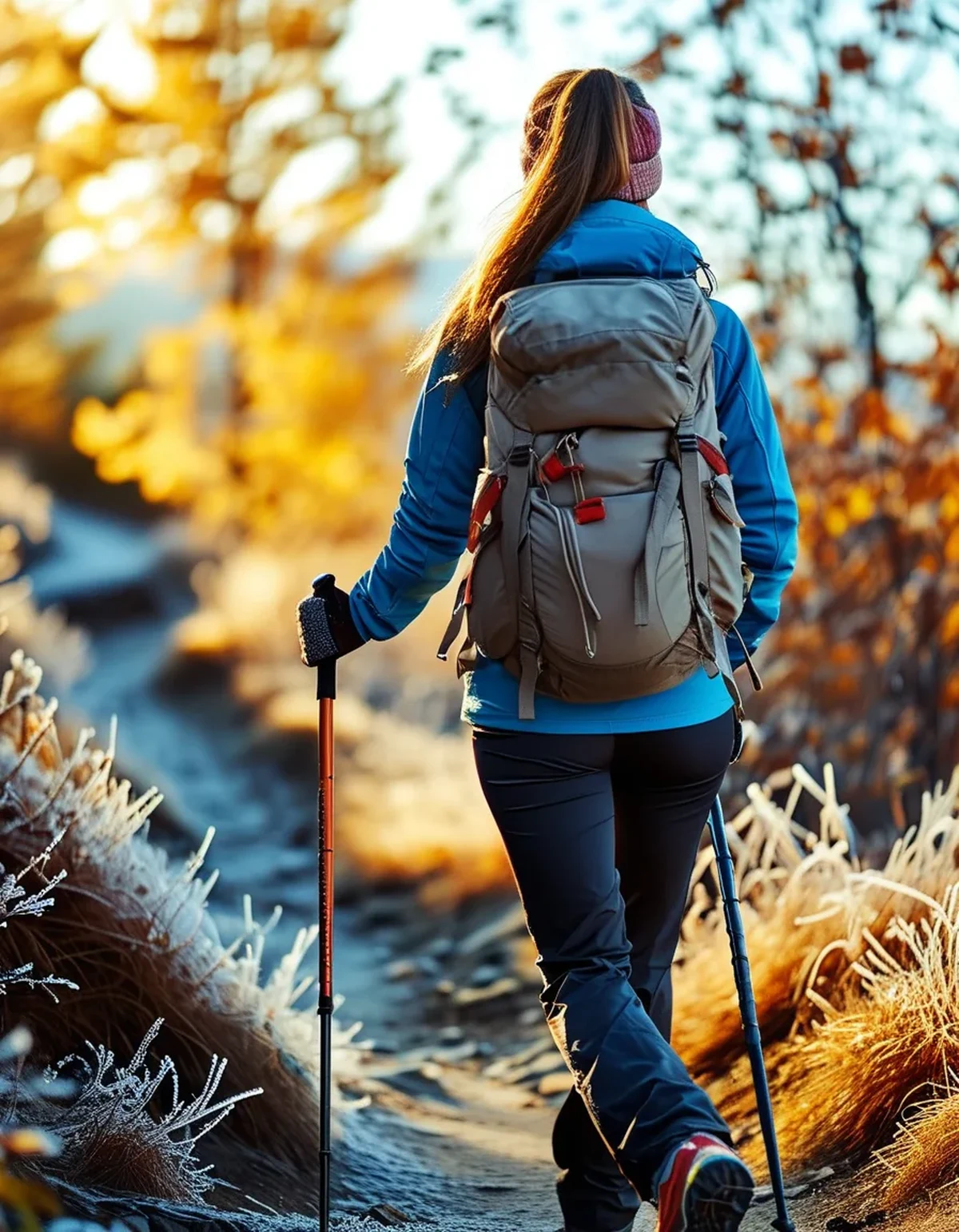
What do gloves actually change?
They alter the one interface the entire technique depends on.
Nordic walking transmits force through the strap, not the grip. The push comes from the heel of the hand against the strap, with the hand opening at the end of the stroke. This is the defining feature that separates it from walking with poles.
A glove adds thickness inside the strap. The strap was adjusted for a bare hand. With a glove it is effectively looser, and a loose strap does not transmit force — so the hand compensates by gripping.
Gripping shortens the arm swing. A closed hand cannot extend behind the hip properly, so the stroke shortens and the push loses its final third, which is where most of the propulsion is.
Grip fatigue moves to the forearms. Nordic walking should barely fatigue the forearms. If they are the first thing to tire, you are gripping rather than pushing.
Reduced push means reduced upper body work. The heart rate benefit of nordic walking comes from the arms and trunk contributing. Lose the push and you have lost most of the reason to carry poles.
Thicker gloves reduce proprioception too. You feel the strap less clearly, so the timing of the release drifts without any conscious change.
How should you adjust for gloves?
Re-set the straps with the gloves on, and choose the gloves for feel rather than warmth.
Adjust the strap with the glove you will actually wear. Two minutes at the start of the season. The strap should be snug enough that you can open your hand completely and the pole stays under control.
Test it by opening your hand fully mid-stroke. If the pole drops or swings wildly, the strap is too loose. If your hand cannot open, it is too tight.
Choose thin gloves over warm ones. A thin liner glove plus a slightly warmer jacket cuff does more for comfort than a thick glove that ruins your technique. Your hands warm up within ten minutes anyway once the arm work starts.
Look for gloves with a smooth palm. A grippy silicone palm sticks to the strap and prevents the hand from opening cleanly at the end of the stroke.
Consider nordic-specific gloves with an integrated strap. Several manufacturers make gloves that incorporate the strap system directly, which removes the whole problem.
Carry a second thinner pair. Starting cold and warming up means one pair is usually wrong for half the session.
Re-check the strap after twenty minutes. Straps settle, and glove material compresses. A quick tighten mid-session is normal.
How do you check whether your technique has drifted?
Three checks, all of which take under a minute.
Open your hand fully at the end of each push, deliberately, for twenty strokes. If this feels awkward or unstable, you have been gripping. This is the fastest diagnostic available.
Check where you fatigue. Forearms first means gripping. Shoulders, lats and triceps means the push is working.
Compare heart rate on a known route. Nordic walking should raise heart rate meaningfully over the same walk without poles. If the gap has closed since you started wearing gloves, the push has gone.
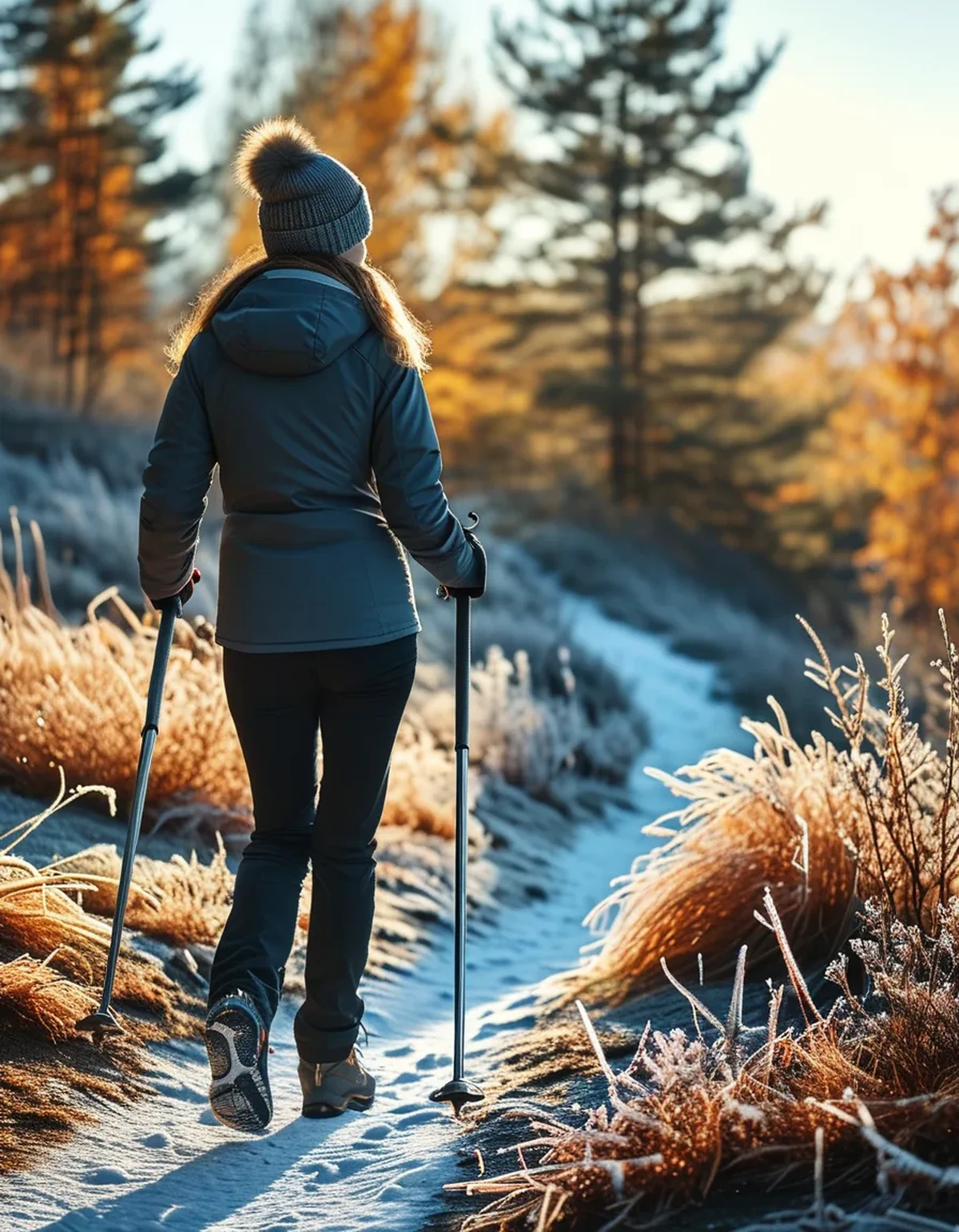
Look at your pole tip placement. The tip should land behind your front foot, angled back. Gripping tends to bring the plant forward and more upright, which is walking with poles rather than nordic walking.
Have someone film ten seconds from the side. The hand opening at the end of the stroke is instantly visible on video and almost impossible to self-assess.
Listen to the rhythm. A proper push produces a consistent, even tick from the tips. A gripped, shortened stroke sounds irregular.
Seasonal note: the same drift happens with wet leaves and frost under the tips, where the pole slips and you instinctively grip harder to control it. Fitting the right tips for the season — a sharper carbide tip for soft frozen ground, rubber paws for pavement — reduces the slipping that causes the gripping in the first place.
5 Mistakes Nordic Walkers Make in Cold Weather
Keeping summer strap settings all winter. The strap was adjusted for a bare hand. It needs redoing the day the gloves come out.
Buying the warmest gloves available. Thick gloves are the direct cause of the grip problem. Thin gloves plus warm sleeves is the better system.
Gripping harder when the tips slip. The instinct is understandable and it removes the technique. Change the tips instead.
Using the same tips year-round. Rubber paws wear faster in cold and grip poorly on frost; carbide tips are for soft or icy ground and are noisy and slippery on wet pavement.
Shortening the stroke because of thicker clothing. A bulky jacket restricts shoulder extension, which shortens the push independently of the glove problem. Choose a jacket with genuine arm mobility.
And the frequent one: dropping the arm swing entirely on cold days because the hands are cold, when the arm work is exactly what warms the hands up. Push harder for the first ten minutes.
FAQ: Nordic Walking in Cold Weather, Answered
What thickness of glove is best?
As thin as you can tolerate. A liner-weight glove preserves strap feel; a thick insulated glove does not.
Should I readjust straps every session?
Check them at the start and again after twenty minutes. Materials compress and straps settle.
Why do my forearms ache now and they did not in summer?
Almost certainly gripping instead of pushing. Loosen nothing — tighten the strap so it holds the load, and consciously open the hand.
Are nordic-specific gloves worth it?
If you walk through the winter regularly, the integrated strap systems solve the problem properly and are worth the outlay.
Which tips should I use in autumn?
Rubber paws for pavement and dry trail, carbide for frost, ice and soft ground. Slipping is what causes the gripping.
Do my hands really warm up without thick gloves?
For most people, within ten minutes once the arm work starts. Start with a thin pair and a warm sleeve rather than compromising the technique for the whole session.
TL;DR:
- Nordic walking pushes through the strap, not the grip — gloves slacken the strap and force you to grip.
- Gripping shortens the stroke, moves fatigue to the forearms and removes most of the heart rate benefit.
- Re-adjust straps with your gloves on, and check again after twenty minutes.
- Choose thin gloves with a smooth palm; warmth comes from the sleeve and the arm work.
- Slipping tips cause gripping — fit carbide for frost, rubber paws for pavement.
Open your hand fully at the end of twenty strokes. That tells you everything.
See It in Motion
Seen here: High Waist Jogger Sweatpants with Pockets — shop it on bubblelime.com
Keep Reading
This article is for general informational and styling purposes only. Fit, sizing, and product availability may vary.