Why Nordic Walking Poles That Are Even Slightly Too Long Show Up as Shoulder Strain First
Nordic walking poles that are even an inch or two too long don’t usually announce themselves through an obviously awkward stride — the mismatch tends to show up first as shoulder strain, because the shoulders are the joint doing the quiet compensating while the legs keep walking normally.
Why Pole Length Errors Hit the Shoulders Before the Stride
The mechanism: an-overly-long-pole-forces-the-shoulder-to-elevate-and-the-elbow-to-lock-out-straighter-than-intended-with-every-plant-in-order-to-still-reach-the-ground-at-the-right-angle (an overly long pole forcing the shoulder to elevate and the elbow to lock out straighter than intended with every single plant, simply in order to still reach the ground at the correct angle, per the nordic-walking-technique-guide logic — an-overly-long-pole-forcing-the-shoulder-to-elevate-and-the-elbow-to-lock-out-straighter-than-intended-with-every-single-plant-simply-to-still-reach-the-ground-at-the-correct-angle), and the reframe (the shoulder absorbing a length mismatch that the stride itself can mostly keep hiding)).

Why the Mistake Is Easy to Miss Until Soreness Appears
The delay: the stride-length-and-cadence-can-stay-nearly-normal-even-with-a-poorly-fitted-pole-because-the-shoulder-and-elbow-are-doing-the-compensating-not-the-legs (stride length and cadence being able to stay nearly normal even with a poorly fitted pole, because it’s specifically the shoulder and elbow absorbing the compensation, not the legs or gait, which means nothing looks visibly wrong during the walk itself, per the nordic-walking-guide logic — stride-length-and-cadence-staying-nearly-normal-even-with-a-poorly-fitted-pole-because-the-shoulder-and-elbow-are-absorbing-the-compensation-not-the-legs-meaning-nothing-looks-visibly-wrong), and the frame (a fit problem staying invisible during the activity itself and only surfacing afterward as soreness)).
How to Check Pole Length Using Elbow Angle
The check: the plant-the-pole-tip-on-flat-ground-while-standing-upright-and-confirm-the-elbow-sits-at-roughly-a-ninety-degree-angle-rather-than-relying-on-a-height-based-chart-alone (planting the pole tip on flat ground while standing upright and gripping the handle normally, and confirming the elbow sits at roughly a ninety-degree angle at that point, rather than relying on a generic height-based sizing chart alone, per the nordic-walking-poles-buying-guide logic — the planting-the-pole-tip-on-flat-ground-while-standing-upright-and-confirming-the-elbow-sits-at-roughly-a-ninety-degree-angle-rather-than-relying-on-a-generic-height-based-chart-alone), and the frame (the elbow angle, checked directly, being a far more reliable fit test than a height number alone).
An overly long pole forces the shoulder to elevate and the elbow to lock out straighter than intended with every single plant, simply to still reach the ground at the correct angle, and because stride length and cadence can stay nearly normal while the shoulder does the compensating, nothing looks visibly wrong during the walk itself. Planting the pole tip on flat ground while standing upright and confirming the elbow sits at roughly a ninety-degree angle, rather than relying on a generic height-based sizing chart alone, is a far more reliable way to catch the mismatch before it turns into shoulder soreness.
See It in Motion
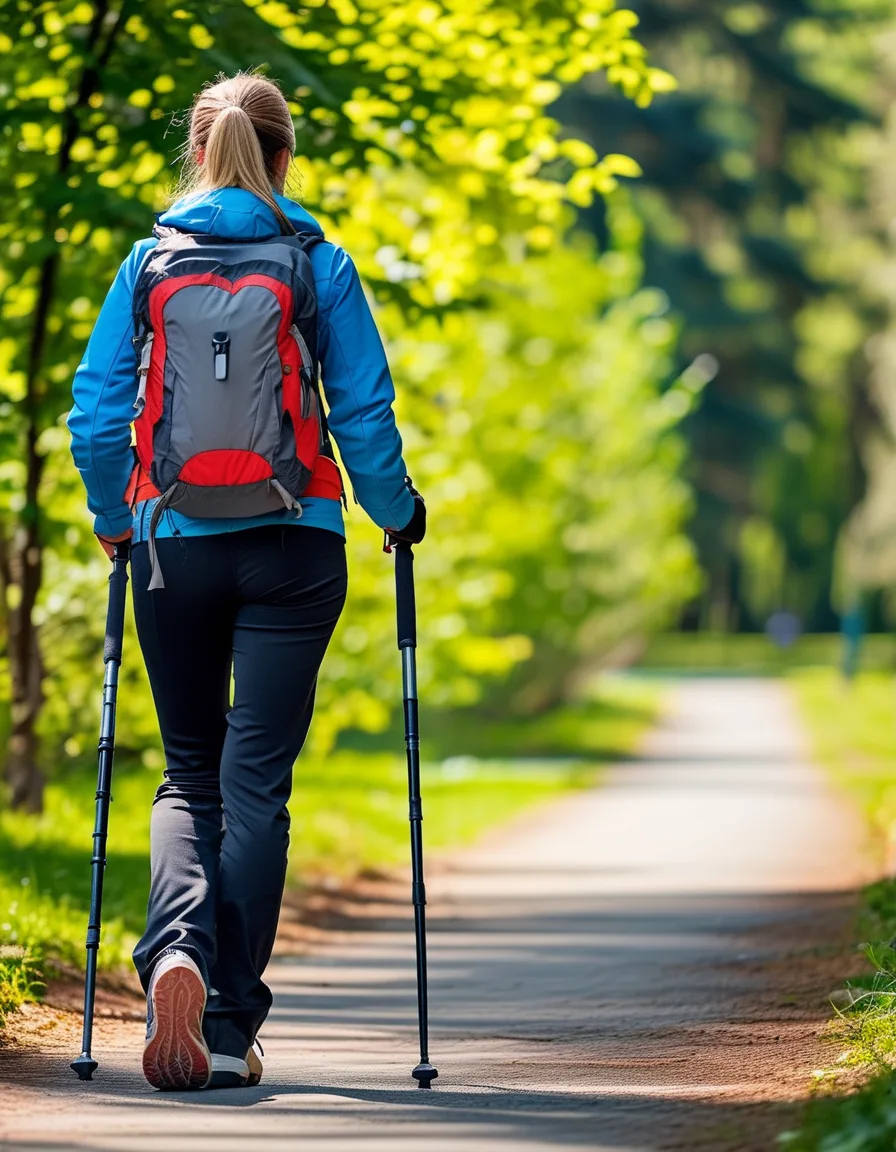
Seen here: High Waist Yoga Leggings with Side Pockets — shop it on bubblelime.com
Keep Reading
This article is for general informational and styling purposes only. Fit, sizing, and product availability may vary.