Why Nordic Walking Burns More Than Regular Walking (The Mechanism, Not Just the Claim)
The claim that Nordic walking burns significantly more than regular walking sounds like marketing, but the mechanism behind it is a straightforward biomechanical one involving how the poles engage the upper body during a normal walking stride.
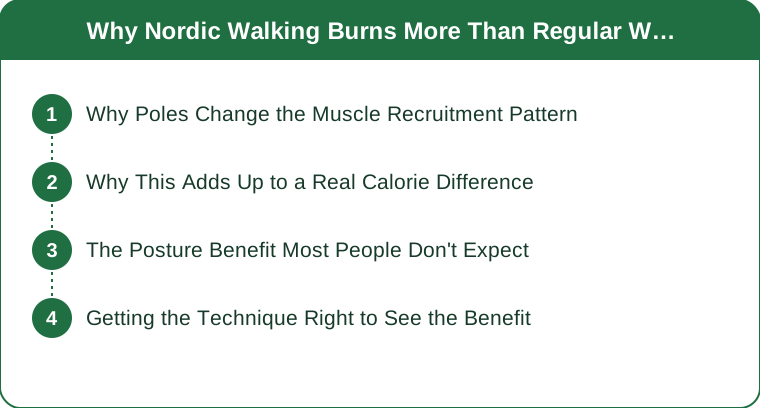
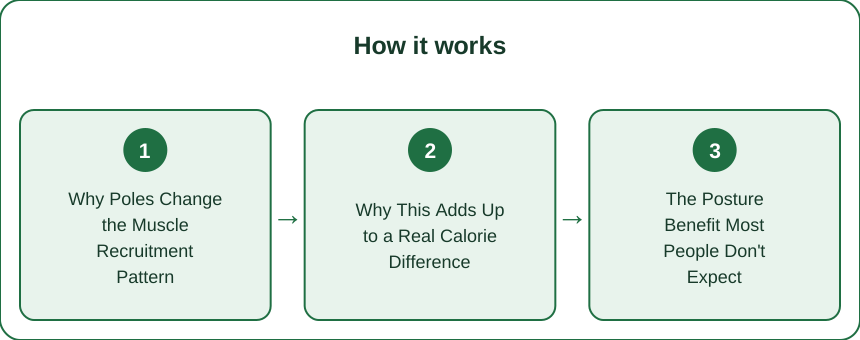
Why Poles Change the Muscle Recruitment Pattern
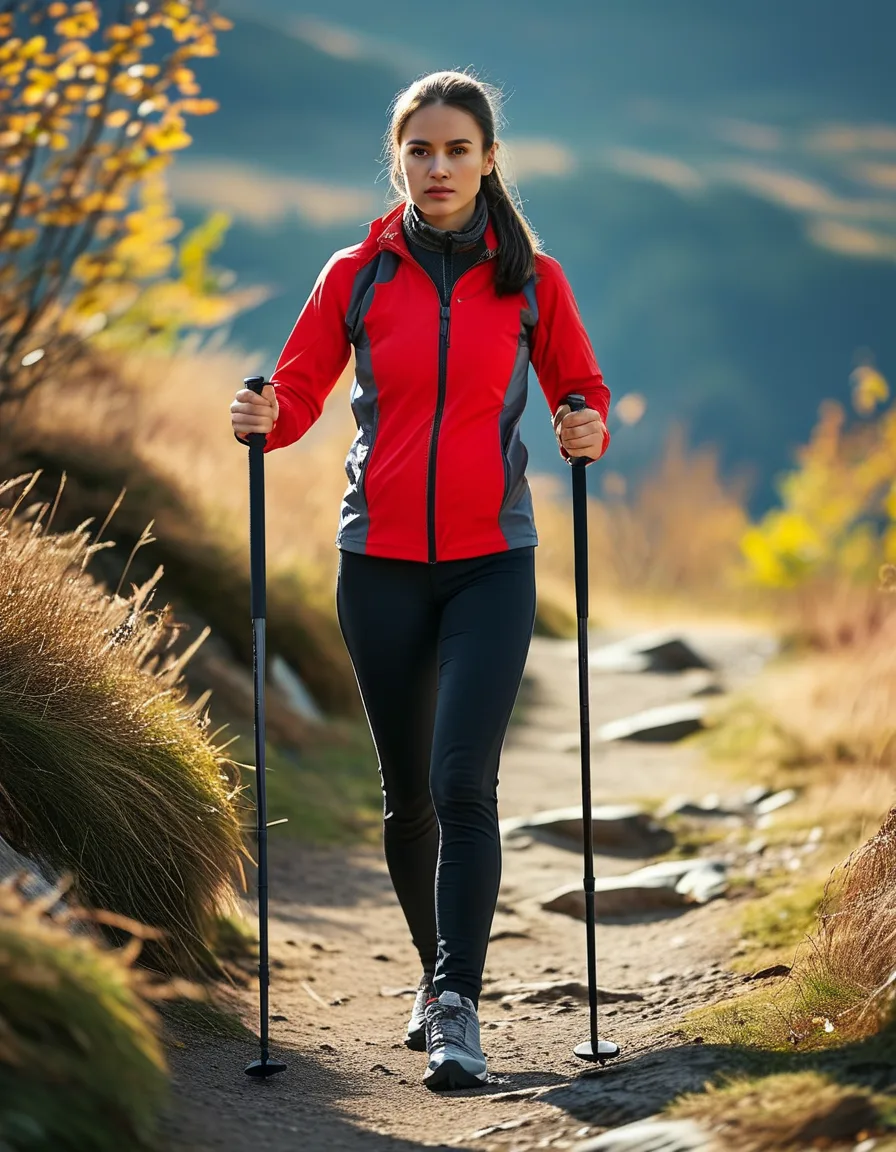
The mechanism: proper pole planting requiring active pushing through the shoulders, triceps, and core with every stride, engaging major upper body muscle groups that a normal walking stride, arms swinging freely, essentially leaves idle.
Why This Adds Up to a Real Calorie Difference
The math: engaging additional large muscle groups throughout an entire walk requiring measurably more total energy expenditure than the same walking pace and distance without that upper body engagement, which is where the commonly cited twenty to forty percent higher calorie burn actually comes from.

The Posture Benefit Most People Don’t Expect
The added effect: the pole-planting motion naturally encouraging a more upright torso and engaged core throughout the walk, correcting the forward-hunched posture that a normal casual walk often allows to creep in over a longer distance.
Getting the Technique Right to See the Benefit
The technique requirement: the calorie and muscle engagement benefit depending entirely on an active push-off through the pole rather than just using poles as passive balance support, since the latter provides stability but skips the actual mechanism that produces the extra benefit, and the frame (Nordic walking’s extra benefit over regular walking comes specifically from actively pushing through the poles with each stride, engaging upper body muscles a normal walk leaves idle — poles used only for balance skip that mechanism entirely.)
Nordic walking’s claim of burning meaningfully more than regular walking comes down to a straightforward biomechanical mechanism rather than marketing, since proper pole planting requires actively pushing through the shoulders, triceps, and core with every stride, engaging upper body muscle groups a normal walking stride with freely swinging arms essentially leaves idle. Adding that engagement across an entire walk requires measurably more total energy expenditure at the same pace and distance, which is where the commonly cited twenty to forty percent higher calorie burn actually comes from, and the same pole-planting motion tends to naturally encourage a more upright torso and engaged core, correcting the forward-hunched posture a long casual walk often allows to creep in. The catch is that this benefit depends entirely on an active push-off through the pole rather than using poles purely as passive balance support, since passive use provides stability but skips the actual mechanism that produces the extra calorie and posture benefit.
See It in Motion
Seen here: Super High Waist Embossed Yoga Leggings with Inner Pocket — shop it on bubblelime.com
Keep Reading
This article is for general informational and styling purposes only. Fit, sizing, and product availability may vary.