The Pole Angle Mistake That Turns Nordic Walking Into Just Walking With Sticks
Quick Answer: Planting poles straight down beside you rather than angled backward at roughly 45 degrees is the most common Nordic walking technique mistake, and it’s the reason many beginners get essentially the same workout as regular walking — proper backward angle and a deliberate push-off is what actually engages the upper body and core that makes Nordic walking distinct.
You bought Nordic walking poles specifically for the extra upper-body benefit, and after a few walks it feels basically identical to walking without them. The poles aren’t the problem — the angle you’re planting them at almost certainly is.

Why does pole angle make such a big difference?
Nordic walking’s core benefit comes from actively pushing off the poles to propel yourself forward, engaging triceps, shoulders, back, and core in the process. If poles are planted straight down beside your feet (a natural instinct, since it mimics how trekking poles are typically used for stability), there’s no backward push-off force to generate — the poles become a balance aid rather than a propulsion tool, and the upper-body engagement that defines the exercise disappears.
What does the correct technique actually look like?
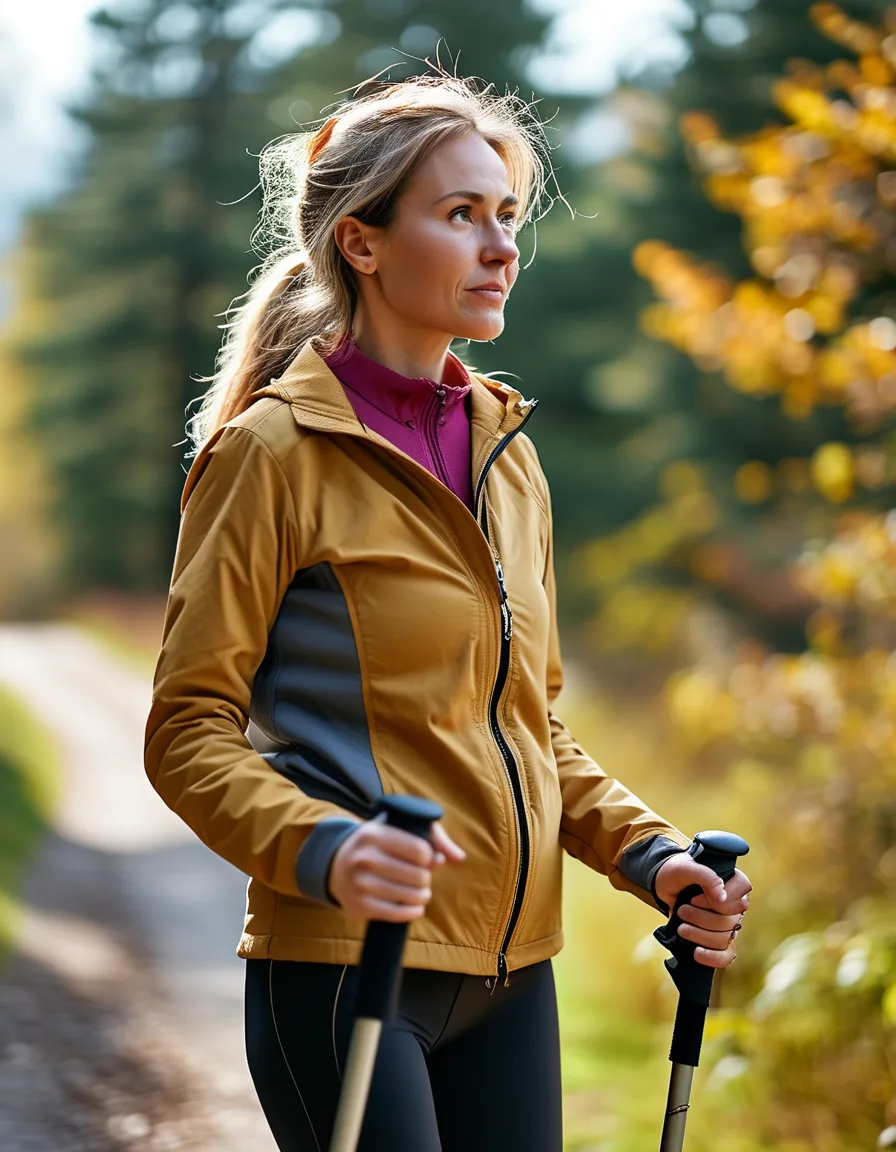
Plant the pole tip behind you at roughly a 45-degree angle, timed so it lands as your opposite foot steps forward, then actively push off through the pole as that arm extends behind you. The motion should feel like you’re propelling yourself forward with the pole, not just tapping it down for support alongside your stride.
5 Mistakes That Turn Nordic Walking Into Regular Walking
1. Planting poles straight down or slightly forward — eliminates the backward push-off force entirely. 2. Gripping the pole too tightly the whole time — proper technique includes briefly opening the hand during the push-off phase (poles have straps for this reason), which most beginners skip out of instinct. 3. Using poles that are the wrong length — too long or too short changes the achievable angle and reduces effective push-off. 4. Not rotating the torso slightly with each pole plant — a small natural rotation is part of what engages the core; walking too rigidly upright reduces this. 5. Taking small, cautious pole plants instead of a full extension — a fuller arm extension behind you generates meaningfully more upper-body engagement than a short, tentative plant.
How much does proper technique actually change the workout?
Research comparing proper Nordic walking technique to regular walking at the same pace shows meaningfully higher energy expenditure and heart rate — commonly cited increases in the 20-46% range for calorie burn — specifically attributable to correct pole technique. Poor technique closes much of that gap, which is exactly why so many people report not feeling a difference from adding poles.
FAQ: Nordic Walking Technique Questions, Answered
How do you find the right pole length?
A common guideline is that your elbow should form roughly a 90-degree angle when the pole tip touches the ground beside your foot in a neutral standing position — adjustable poles make this easier to dial in.
Does it take long to learn proper technique?
Most people notice a real difference within a few sessions of deliberately focusing on the backward angle and push-off, though refining it fully can take a few weeks of practice.
Can you get proper technique feedback without a class?
Recording yourself on a short walk and comparing your pole angle to instructional reference videos is a practical way to self-correct without formal lessons.
TL;DR:
- Planting poles straight down instead of angled back removes the push-off that makes Nordic walking distinct
- Aim for roughly a 45-degree backward plant with an active push-off through the pole
- Pole length and grip technique both affect how much upper-body engagement you actually get
- Proper technique can raise calorie burn by 20%+ compared to regular walking at the same pace
If Nordic walking feels the same as regular walking, check your pole angle before you question whether the poles are doing anything.
See It in Motion
Seen here: High Waist Jogger Sweatpants with Pockets — shop it on bubblelime.com
Keep Reading
This article is for general informational and styling purposes only. Fit, sizing, and product availability may vary.