Hills With Handles: Nordic Walking Technique for Slopes
On flat ground, Nordic poles add a workout; on hills, they add capability — the uphill push that recruits your arms into the climb, the downhill brake that spares the knees. Hills with handles are a different sport from hills without. Here is the slope technique.
The Uphill Push
Climbing, the poles plant slightly further back and PUSH — arms genuinely contributing propulsion (up to a surprising share of the work on steep grades). Shorten stride, lean into the slope from the ankles, and let the four-limb drive make the hill a full-body machine instead of a leg tax.
The Downhill Brake
Descents are where knees pay — poles change the bill: plant slightly ahead, absorb through bent elbows, shorten steps, stay tall-ish (the fearful backward lean makes slips likelier). Each pole plant takes a slice of impact the knees would have invoiced. Trail walkers with cranky knees convert on the first descent.

The Terrain Adjustments
Swap the pavement paws for the trail tips on dirt (the metal tip bites soil), shorten poles slightly for long climbs and lengthen for descents if adjustable, and on mixed terrain let rhythm rule — the poles find their own timing once the arms stop overthinking.
The Confidence Dividend
Poles buy back terrain: the steep park loop, the coastal path, the hike that knees vetoed — reopened. Nordic hill-walkers report route menus expanding within a season. The handles were never just for the workout; they were for the map.
Push behind on the ups, plant ahead on the downs, tips matched to terrain. Hills stop being the route’s obstacle the day your arms join the climb — and the knees ratify the treaty on the first descent.
See It in Motion
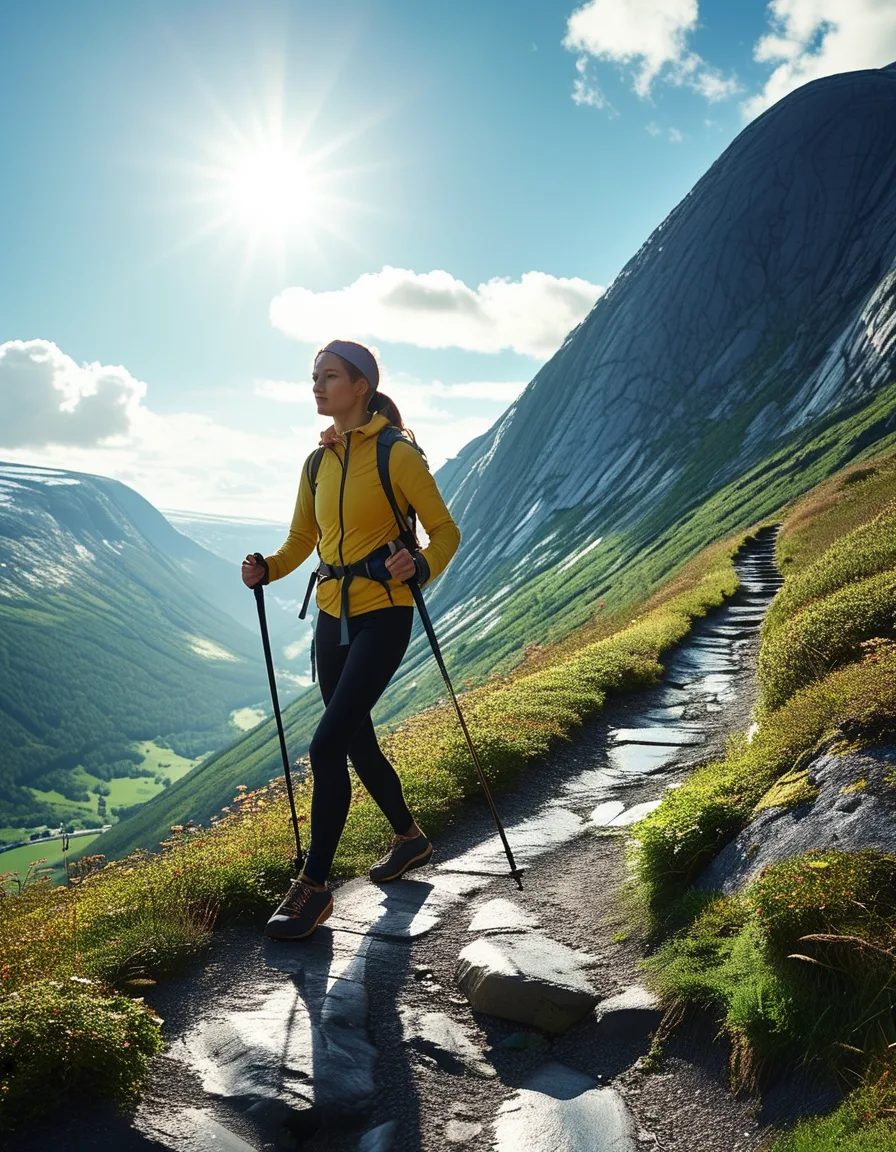
Seen here: High Waist Yoga Leggings with Inner Pocket — shop it on bubblelime.com
Keep Reading
This article is for general informational and styling purposes only. Fit, sizing, and product availability may vary.