The Nordic Walking Pole Length Mistake That's Robbing You of the Workout
Quick Answer: Poles that are too long force you to reach and stab rather than push and propel — the fix is a pole roughly 68% of your height, adjustable so your elbow sits near a 90-degree angle at your side.
You bought poles, watched a video, and you’re walking with sticks — but your arms feel awkward and your heart rate barely climbs above a regular stroll. That’s not a technique failure. It’s very likely the poles themselves.
Why does pole length change the whole workout?
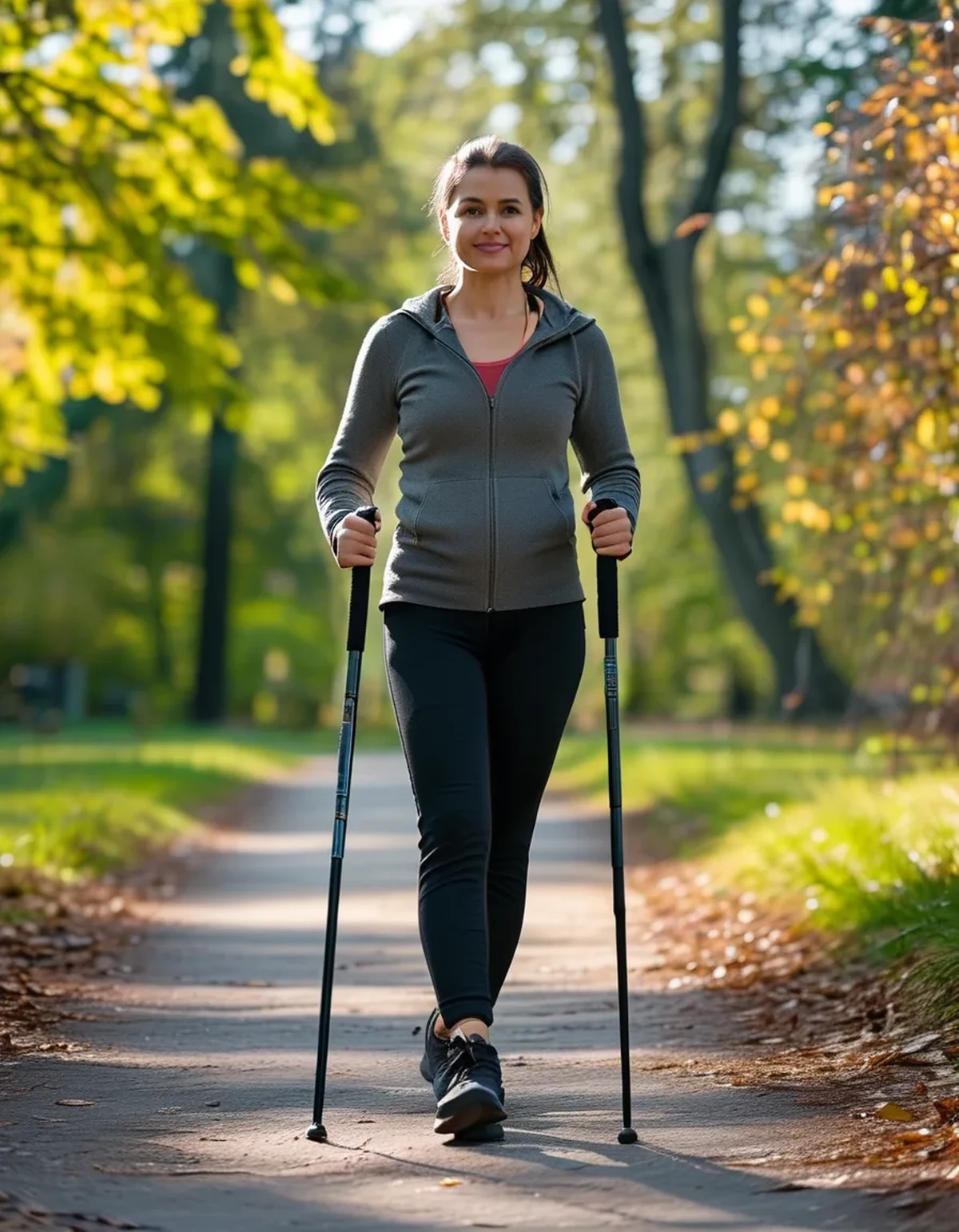
Nordic walking’s entire upper-body benefit comes from pushing off behind you, not planting poles out front like ski poles. When poles are too long, your arm has to reach up and out to plant them, which flips the mechanics into a stab-and-lean motion that barely engages the shoulders, triceps, or core.
Correctly sized poles let your arm swing naturally back and push, which is what turns a walk into a 20-40% higher calorie burn than walking alone.
How do you actually find the right length?
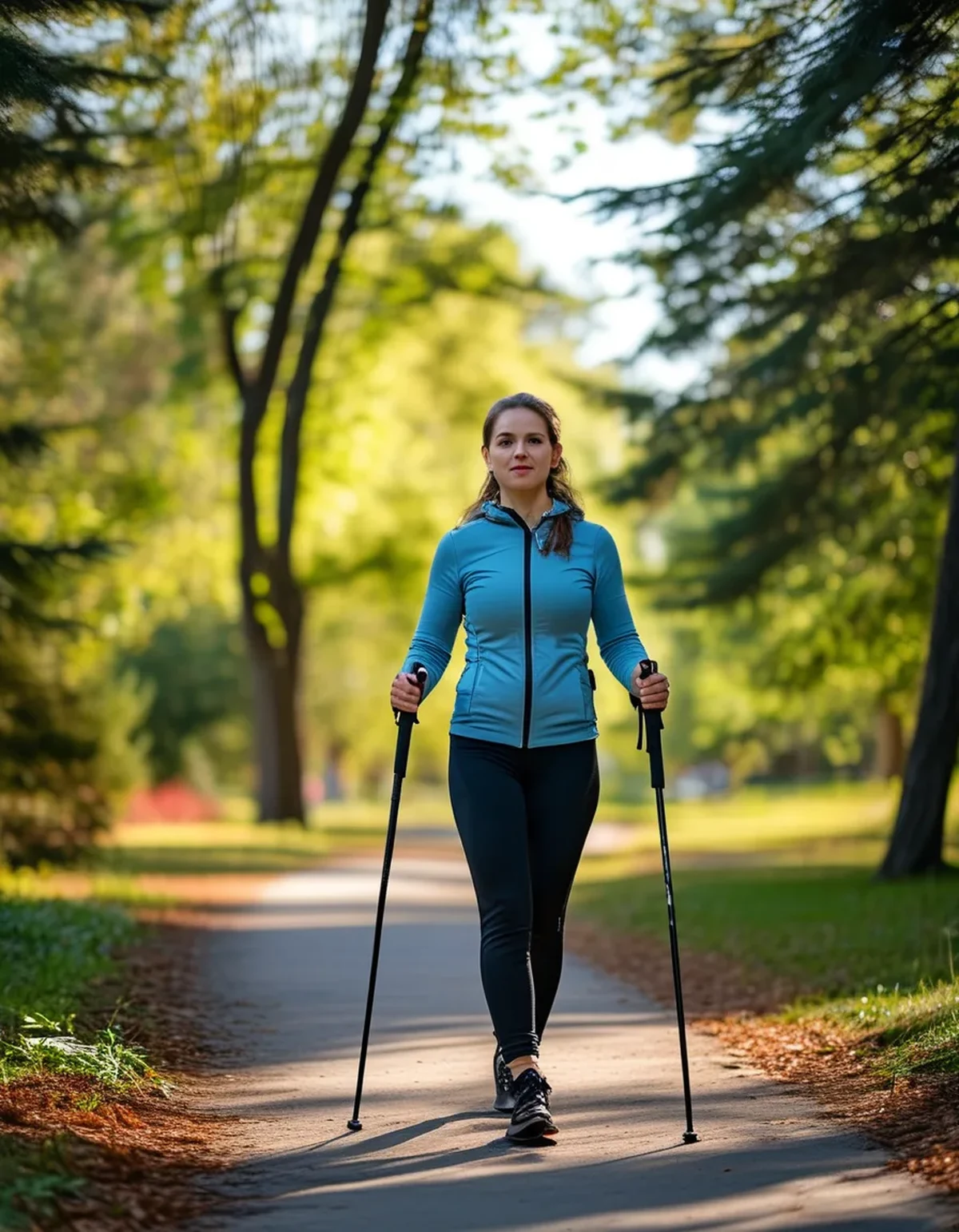
A reliable starting formula: height in cm × 0.68 for the pole length in cm, then fine-tune. Standing with the pole planted beside your foot, your elbow should form roughly a 90-degree angle — not straight, not tightly bent.
Most adjustable poles have a 10-15cm range, so start at the formula number and adjust down if your shoulder feels like it’s shrugging up to compensate.
5 Mistakes People Make With Nordic Walking Poles
1. Buying trekking poles instead of Nordic walking poles. Trekking poles are designed for front-planting on hills, not the rear-push motion Nordic walking needs — different strap and grip design entirely.
2. Gripping too tightly. The strap, not your fist, should do the holding — a relaxed open hand at the push-back point is correct technique.
3. Planting poles too far forward. This is the single biggest mistake and directly causes the “reaching” problem — poles should plant near or slightly behind your foot, not out ahead.
4. Never adjusting for terrain. Uphill sections often need a slightly shorter setting; downhill, slightly longer.
5. Ignoring shoulder fatigue as a sizing clue. Sore shoulders (not forearms) after a session usually means poles are too long.
What if the length feels right but arms still tire fast?
Check your push-through — you should feel the pole loading force through your palm and strap as you extend behind you, not just swinging it forward and back. New Nordic walkers often “carry” the poles rather than actively pushing off them, which tires the shoulders without building the intended strength.
A few sessions focusing purely on the push-back motion (even walking slower) usually resolves this faster than adjusting length again.
FAQ: Nordic Walking Pole Questions, Answered
Should Nordic walking poles be shorter than ski poles?
Yes, noticeably — Nordic walking poles sit around 68% of height versus roughly 70-75% for cross-country ski poles, since the motion and terrain differ.
How do I know if my current poles are too short?
You’ll feel hunched forward or notice you’re bending at the waist to reach the ground comfortably — that’s the opposite problem and just as disruptive to form.
Do I need different pole lengths for different walking speeds?
Not usually — one correctly sized pole works across normal pace variation; only adjust for significant elevation change.
TL;DR:
- Start at height (cm) × 0.68 for pole length, elbow near 90 degrees
- Poles too long cause reaching/stabbing instead of the propulsive push
- Plant near your foot, not out in front — the most common form error
- Shoulder (not forearm) fatigue is usually a sizing signal, not a strength gap
See It in Motion
Seen here: High Waist Yoga Leggings with Inner Pocket — shop it on bubblelime.com
Keep Reading
This article is for general informational and styling purposes only. Fit, sizing, and product availability may vary.